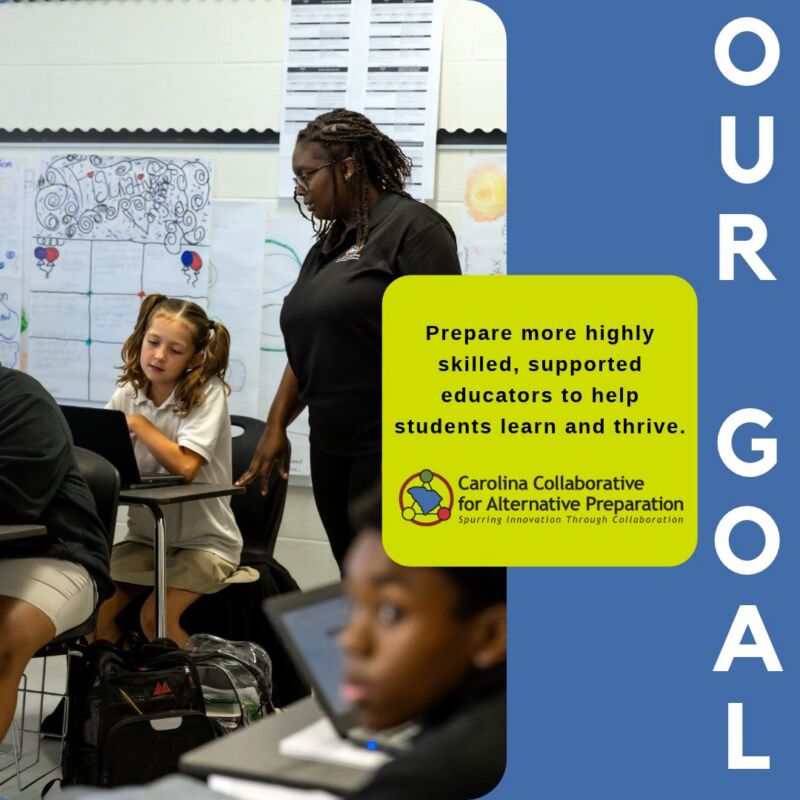


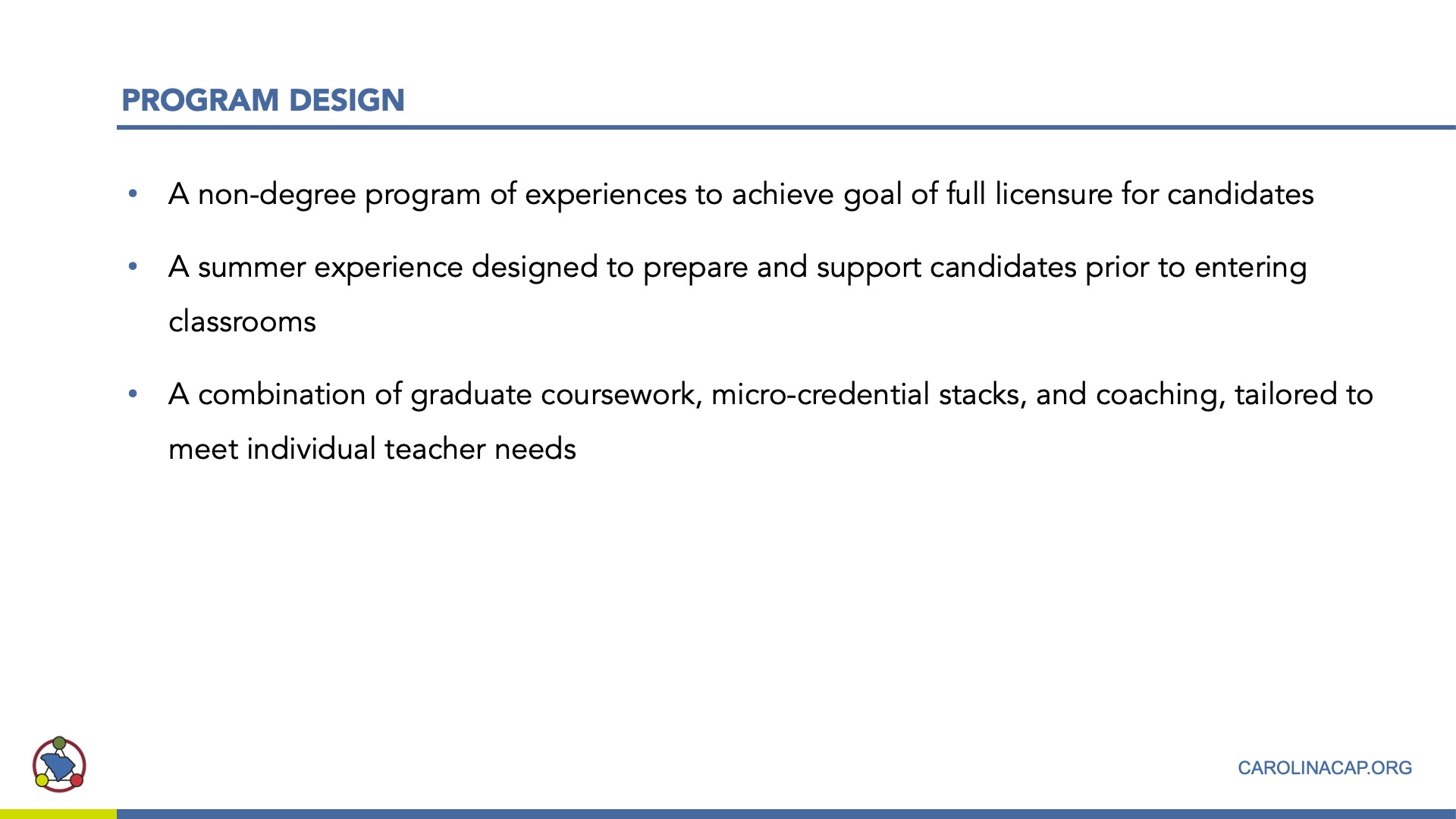
The Carolina Collaborative for Alternative Preparation, or CarolinaCAP, is a non-degree pathway leading to full licensure for teacher candidates.
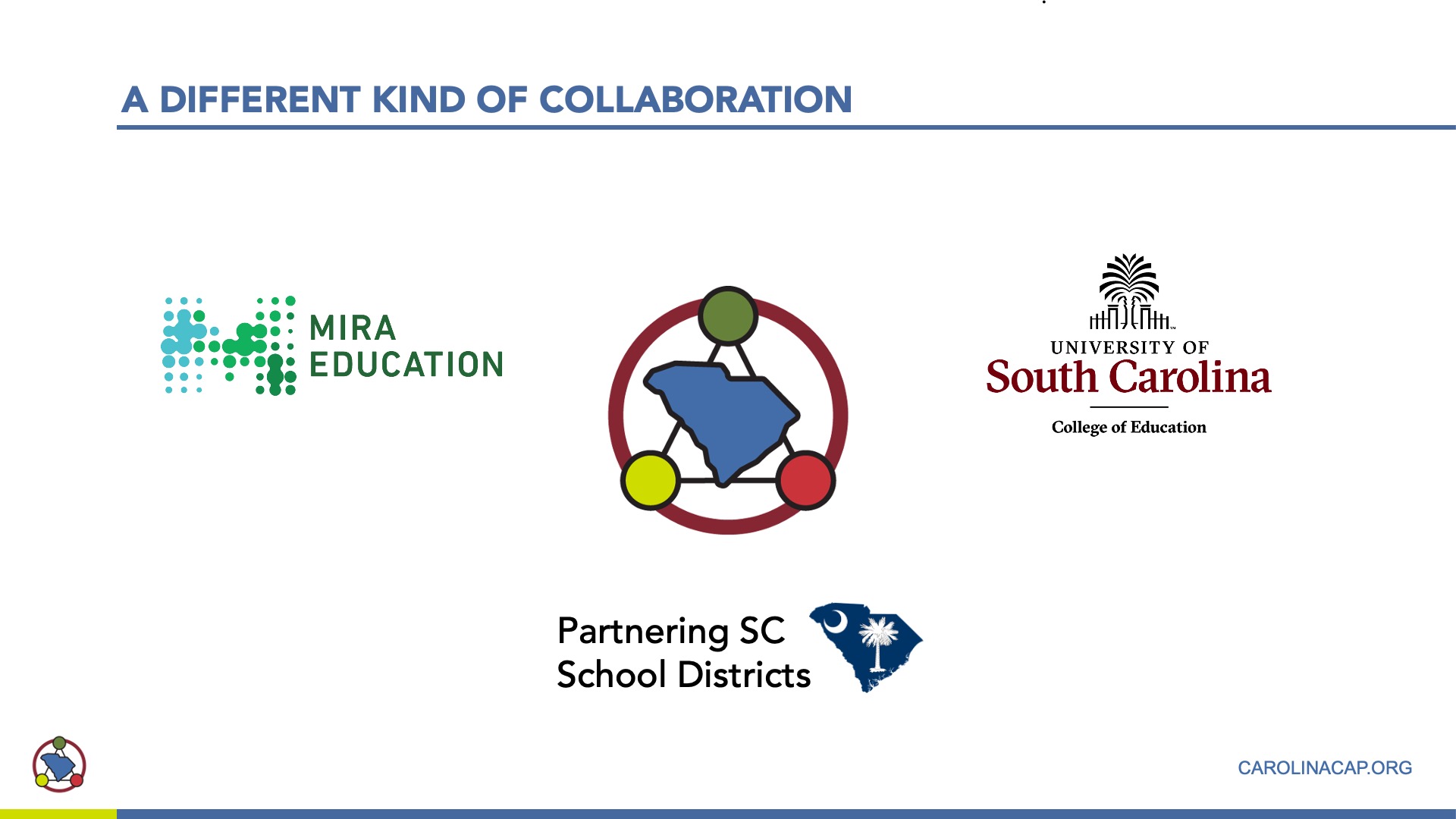
It is a collaboration among South Carolina school districts, the University of South Carolina, and Mira Education with the goal of creating a high-quality alternative pathway into teaching that marries the expertise of local teachers, schools, and districts with nonprofits, data collection partners, and institutions of higher education.
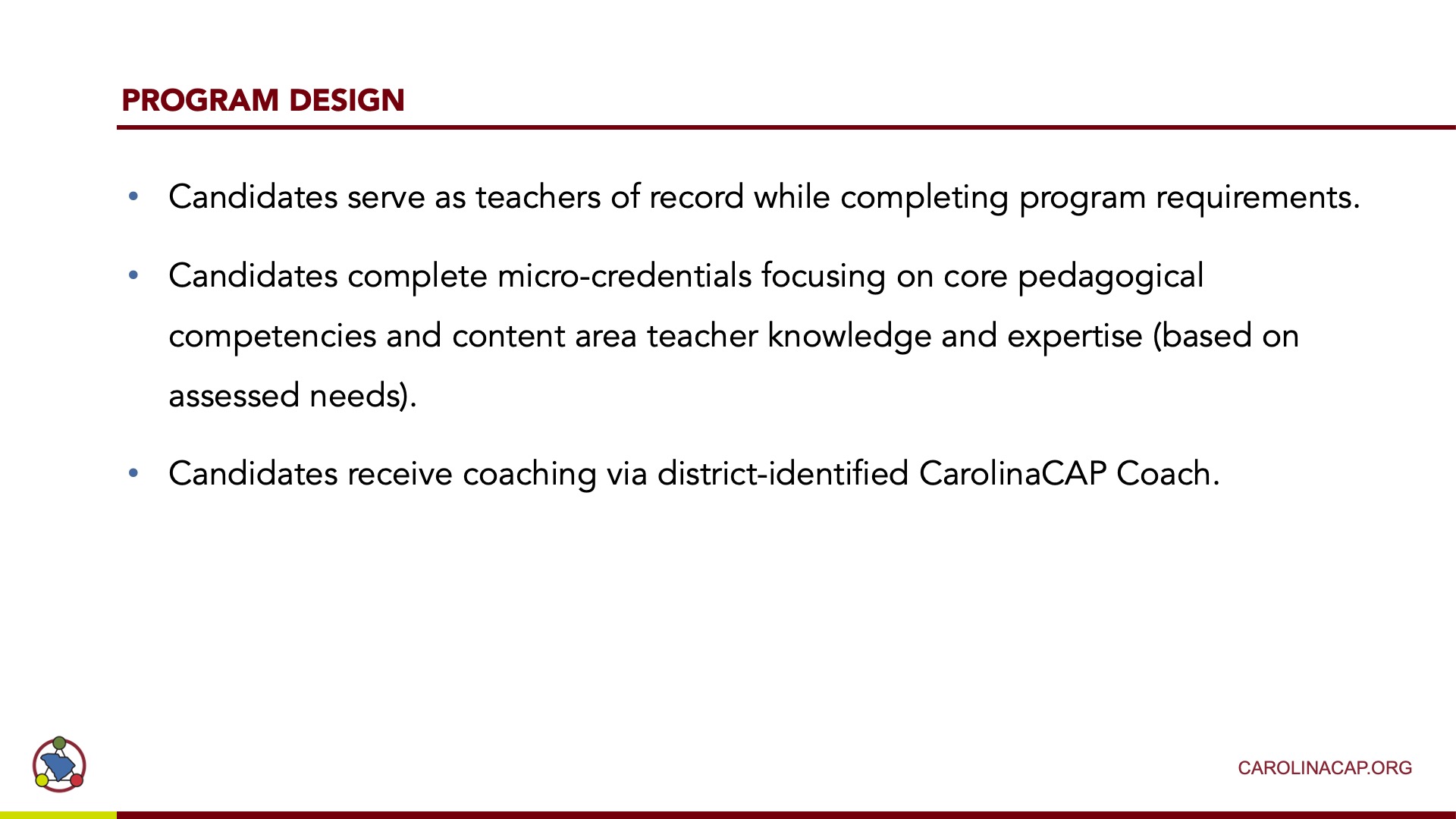
CarolinaCAP candidates participate in a unique, personalized experience:
- Individualized support from a coach selected by the district and trained in the CarolinaCAP Coach model
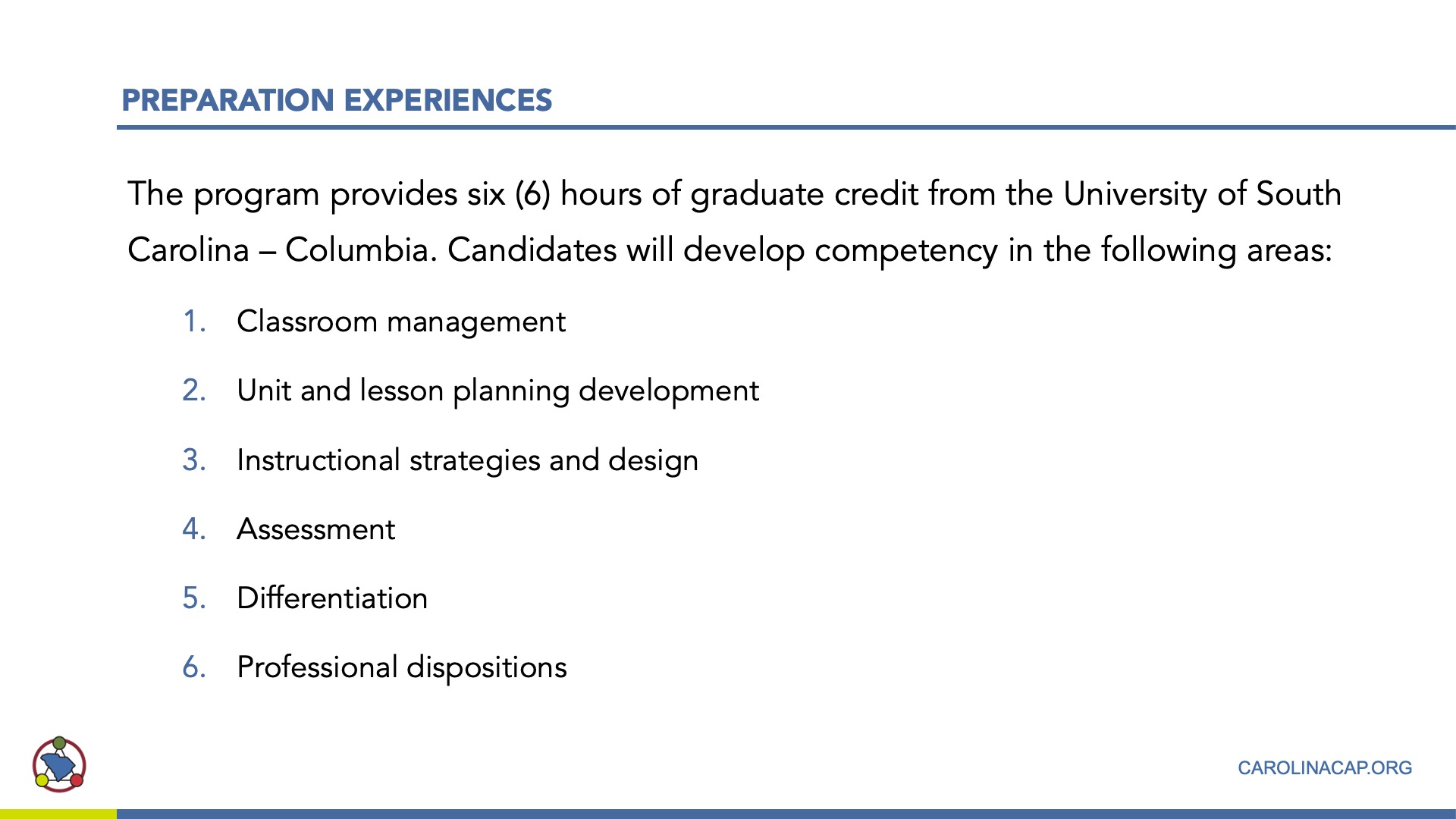
- Engaging coursework designed by expert University of South Carolina faculty
- Micro-credentials selected by CarolinaCAP candidates with the support of a coach
- Multiple opportunities to learn and grow in virtual learning communities
To qualify for CarolinaCAP:
- A bachelor’s degree from a regionally accredited institution of higher education
- A minimum 2.5 cumulative GPA*
- *Applicants applying for certification in the areas of Early Childhood Education, Elementary Education, and Special Education: Multi-categorical (PK–Grade 12) need a minimum 2.75 undergraduate GPA. Applicants not meeting the 2.75 requirements will be considered for admission with a minimum 2.5 undergraduate GPA and passing scores on the three parts (reading, writing, and mathematics) of the Praxis Core Academic Skills for Educators.
- Evidence of passing score(s) on the Praxis II subject area assessments
- Individuals who have previously enrolled in student teaching or another alternative certification program are ineligible for CarolinaCAP.
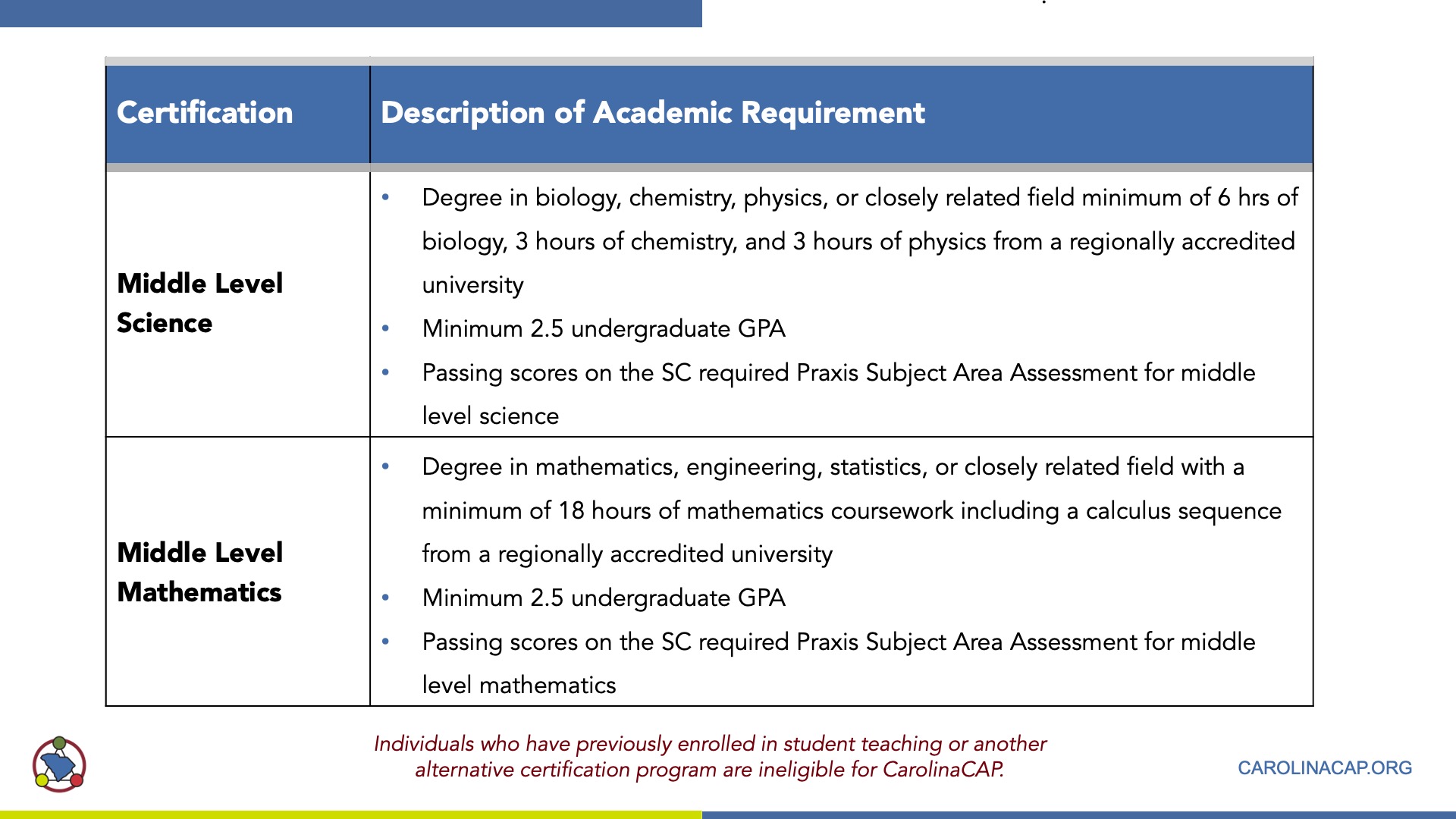
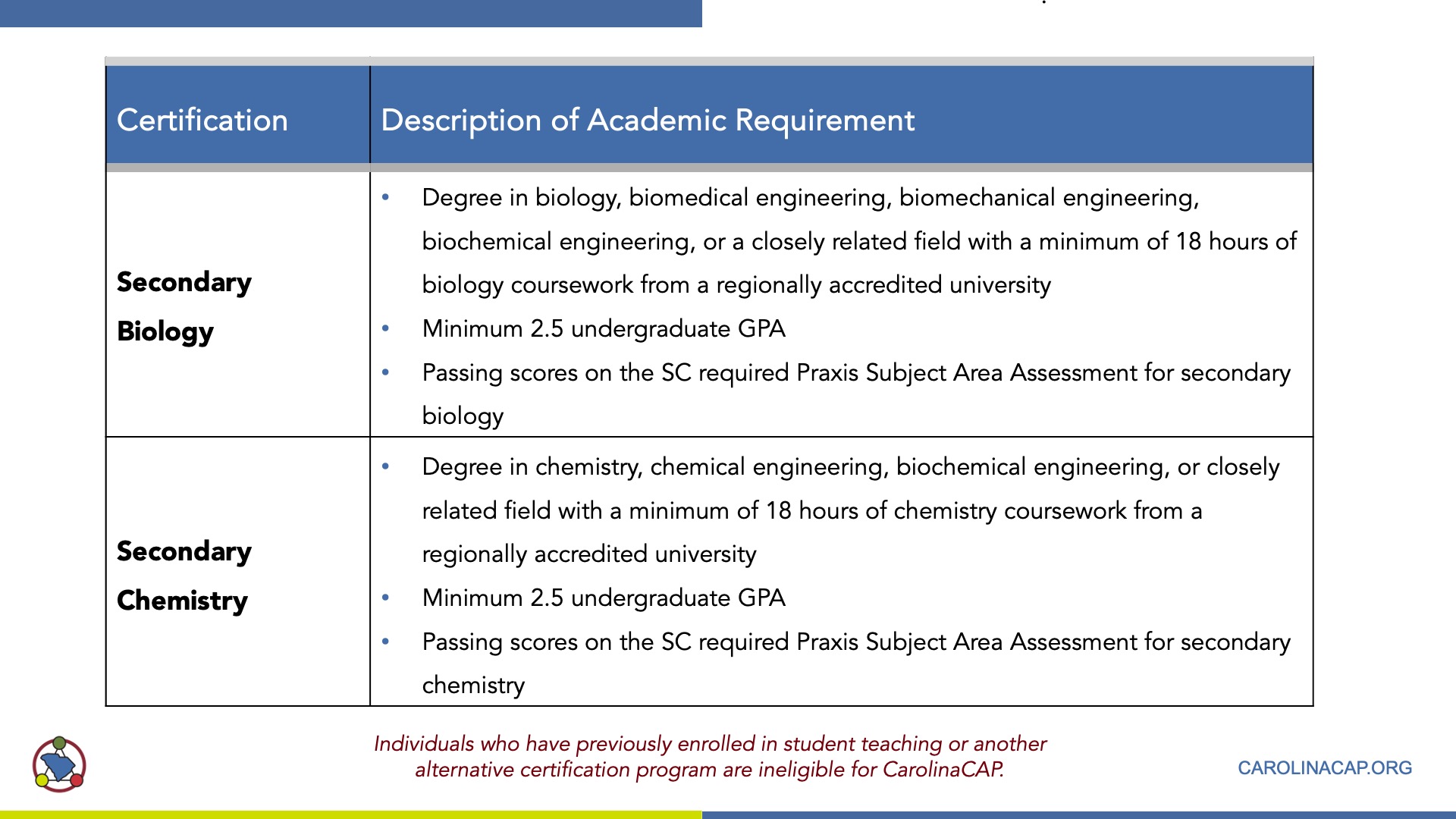
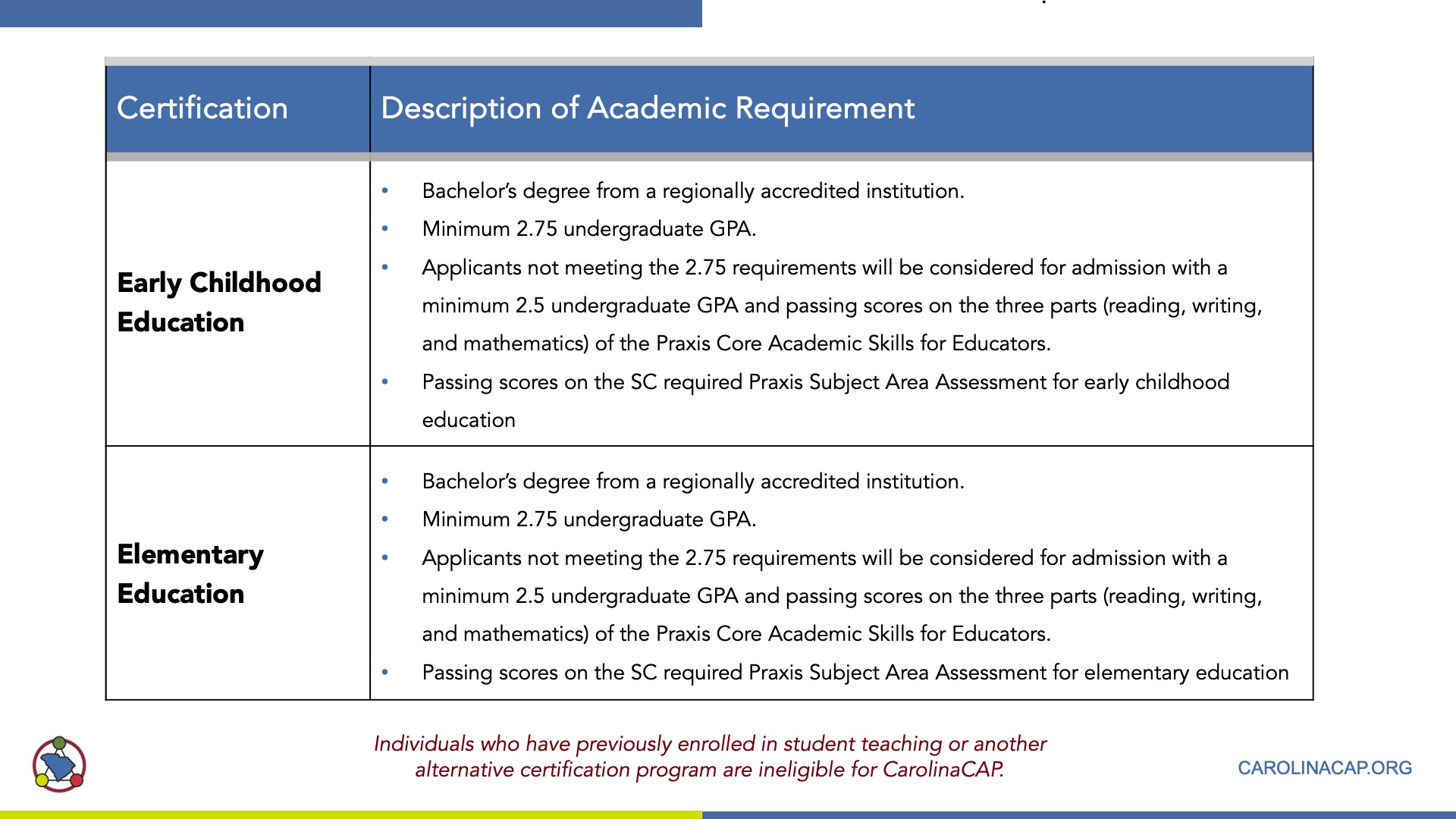
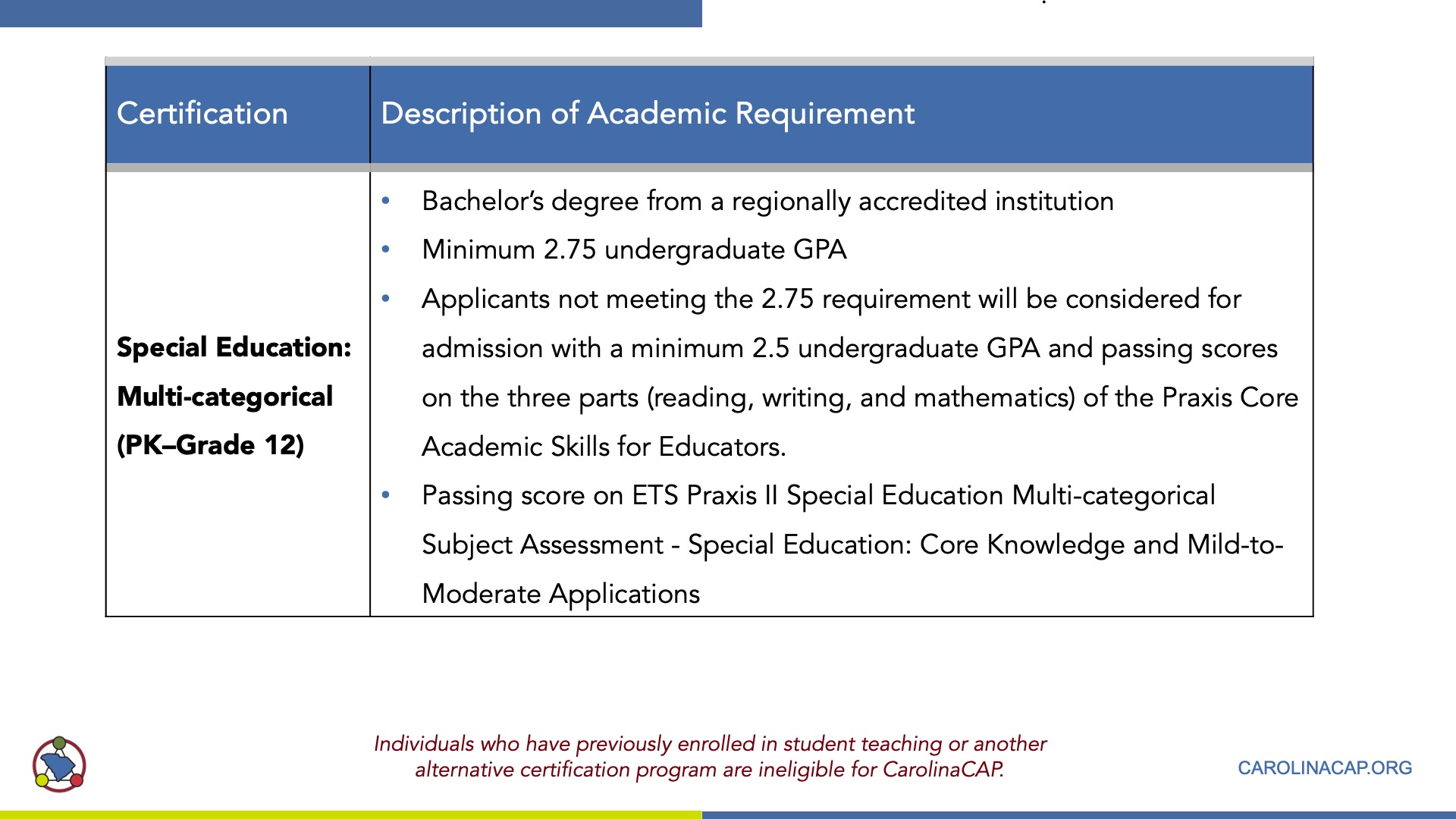
Certification Areas and Academic Requirements
- Degree in biology, chemistry, physics, or closely related field minimum of 6 hrs of biology, 3 hrs of chemistry, and 3 hrs of physics from a regionally accredited university
- Minimum 2.5 undergraduate GPA
- Passing scores on the SC required Praxis Subject Area Assessment for middle level science
- Degree in mathematics, engineering, statistics, or closely related field with a minimum of 18 hrs of mathematics coursework including a calculus sequence from a regionally accredited university
- Minimum 2.5 undergraduate GPA
- Passing scores on the SC required Praxis Subject Area Assessment for middle level mathematics
- Degree in biology, biomedical engineering, biomechanical engineering, biochemical engineering, or closely related field with a minimum of 18 hrs of biology coursework from a regionally accredited university
- Minimum 2.5 undergraduate GPA
- Passing scores on the SC required Praxis Subject Area Assessment for secondary biology
- Degree in chemistry, chemical engineering, biochemical engineering, or closely related field with a minimum of 18 hrs of chemistry coursework from a regionally accredited university
- Minimum 2.5 undergraduate GPA
- Passing scores on the SC required Praxis Subject Area Assessment for secondary chemistry
- Degree in physics, civil engineering, mechanical engineering, or closely related field with a minimum of 18 hrs of physics coursework from a regionally accredited university
- Minimum 2.5 undergraduate GPA
- Passing scores on the SC required Praxis Subject Area Assessment for secondary physics
- Degree in mathematics, engineering, statistics, or closely related field with a minimum of 18 hrs of mathematics coursework including a calculus sequence from a regionally accredited university
- Minimum 2.5 undergraduate GPA
- Passing scores on the SC required Praxis Subject Area Assessment for secondary mathematics
- Bachelor’s degree from a regionally accredited institution.
- Minimum 2.75 undergraduate GPA. Applicants not meeting the 2.75 requirements will be considered for admission with a minimum 2.5 undergraduate GPA and passing scores on the three parts (reading, writing, and mathematics) of the Praxis Core Academic Skills for Educators.
- Passing scores on the SC required Praxis Subject Area Assessment for early childhood education.
- Bachelor’s degree from a regionally accredited institution.
- Minimum 2.75 undergraduate GPA. Applicants not meeting the 2.75 requirements will be considered for admission with a minimum 2.5 undergraduate GPA and passing scores on the three parts (reading, writing, and mathematics) of the Praxis Core Academic Skills for Educators.
- Passing scores on the SC required Praxis Subject Area Assessment for elementary education
- Bachelor’s degree from a regionally accredited institution
- Minimum 2.75 undergraduate GPA
- Applicants not meeting the 2.75 requirement will be considered for admission with a minimum 2.5 undergraduate GPA and passing scores on the three parts (reading, writing, and mathematics) of the Praxis Core Academic Skills for Educators.
- Passing score on ETS Praxis II Special Education Multi-categorical Subject Assessment – Special Education: Core Knowledge and Mild-to-Moderate Applications
Start The Pre-Screening Process Today!
Program to Pathway
Every student deserves an exceptional teacher, regardless of where they live.
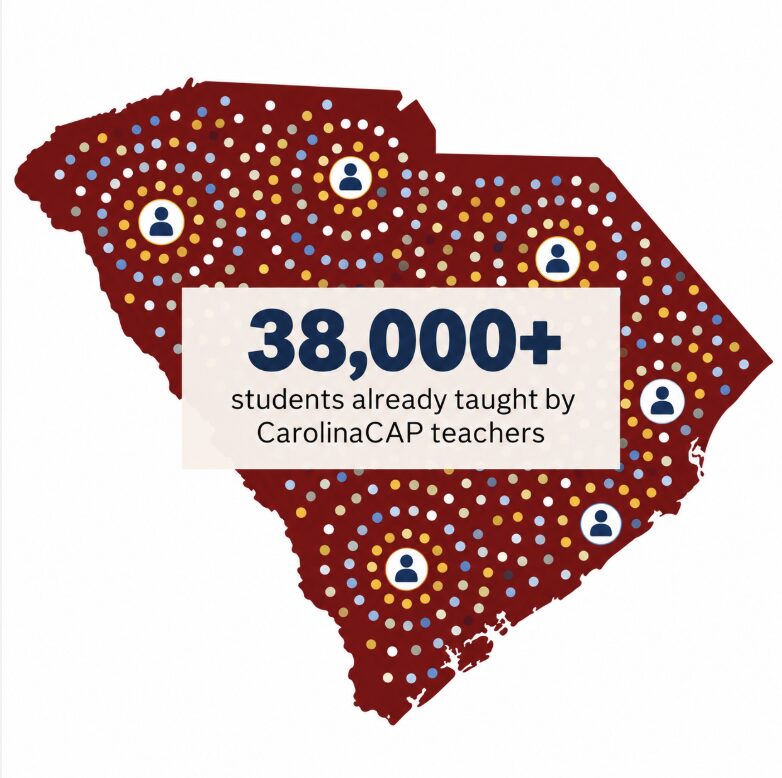
As schools across South Carolina welcome students back this month, CarolinaCAP remains committed to preparing highly qualified educators who are ready to serve rural communities with excellence,
The school year is officially underway, and so is another season of possibility.
Across South Carolina, CarolinaCAP candidates are stepping into classrooms ready to lead with confidence, supported by dedicated mentors, instructional coaches, and district partners.
Together,
Behind every classroom door is the opportunity to change a student's story.
This August, we're celebrating the educators who choose to serve where they're needed most—bringing passion, knowledge, and hope to schools and communities across South Carolina.
❤️ Tag an educator
Strong schools build strong communities.
CarolinaCAP is proud to partner with districts across South Carolina to prepare and support highly effective educators who are committed to their students, schools, and communities.
This school year, we’re continuing to invest in
Success in education isn't built in a single moment—it's built through continuous learning, meaningful mentorship, and a supportive community.
Summer BRIDGE and Summer Experience showcase the strength of the CarolinaCAP model: guiding educators from their first steps into the
Great teachers are lifelong learners.
At Summer Experience, CarolinaCAP Candidates came together to reflect on their accomplishments, strengthen their instructional practices, and continue growing as educational professionals.
Through collaboration, professional learning, and